
Epi #199. Calm Down Your Child’s Triggers With the P.E.A.C.E. Process.
Feb 03, 2026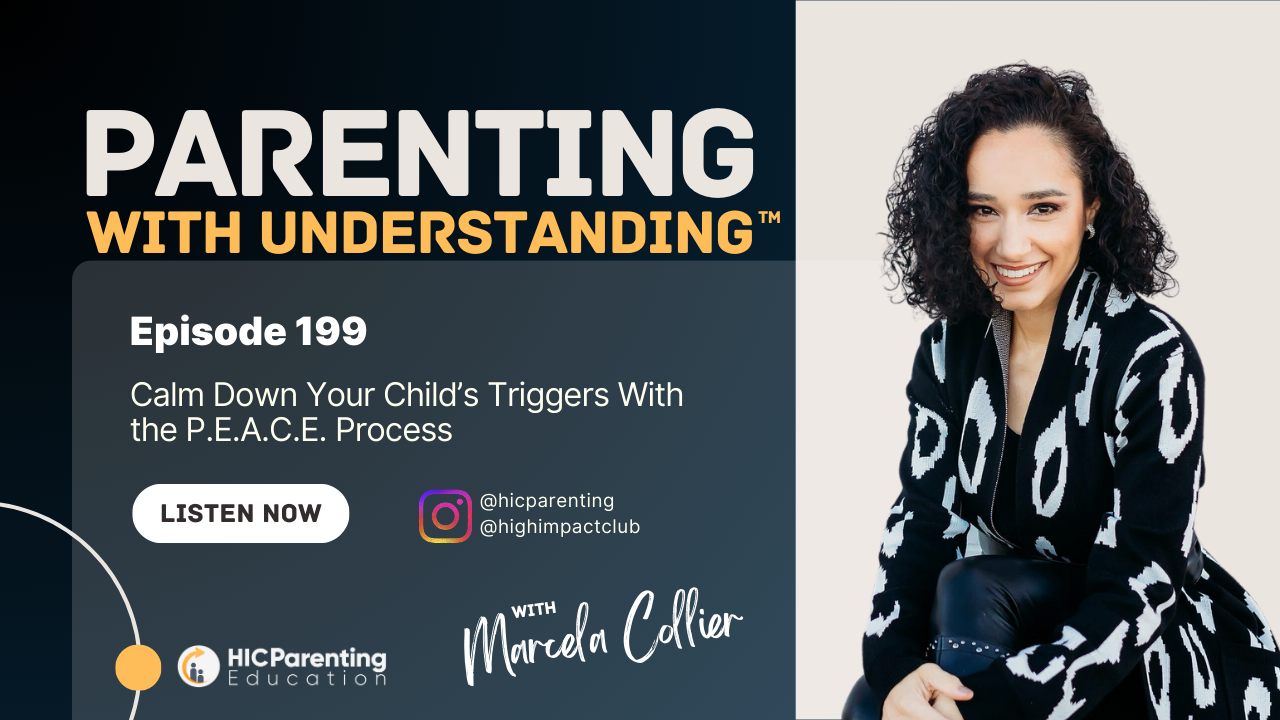
Have you ever watched your child go from calm…
to screaming…
to completely falling apart in seconds?
One minute they’re playing.
The next minute they’re yelling, hitting, or melting down.
And you’re standing there thinking…
“What just happened?”
If that sounds familiar, I want you to take a deep breath with me.
Because this article is for you.
And more importantly…
👉 Your child’s behavior is not the problem.
That might sound strange.
Maybe even uncomfortable.
But once you understand what’s really going on, everything starts to make sense.
This is the place where you’ll finally find answers.
Not blame.
Not shame.
Not another “try harder” parenting tip.
Just clarity.
And a path forward.
1. The Desire Every Parent Has (Even If They Don’t Say It Out Loud)
Every parent I work with wants the same thing.
They want peace.
They want to enjoy their kids.
They want to stop yelling.
They want to stop feeling like a failure by bedtime.
They want to raise kids who feel safe.
Kids who listen.
Kids who don’t explode over every little thing.
And deep down, they want to be the parent they promised themselves they would be.
Not the one who snaps.
Not the one who shuts down.
Not the one who sounds like their own parents.
If that’s you, you’re not alone.
I’ve been there too.
2. The Moment Parents Start Blaming Themselves
Most parents don’t come to me angry at their kids.
They come angry at themselves.
They say things like:
“Why can’t I stay calm?”
“I know better, but I still react.”
“I feel like I’m ruining my child.”
And every hard moment adds another layer of guilt.
Especially when you’re parenting a sensitive child.
Or a neurodivergent child.
Or a child who feels everything deeply.
You start wondering…
“Is this my fault?”
Let me say this clearly:
👉 You are not failing.
👉 Your child is not broken.
What’s missing is not effort.
It’s understanding.
3. Why Focusing on Behavior Keeps You Stuck
Most parenting advice focuses on behavior.
Stop the tantrum.
Correct the backtalk.
Fix the hitting.
So parents try:
Consequences.
Time-outs.
Rewards.
Lectures.
And maybe it works…
for a moment.
But then the behavior comes back.
Bigger.
Louder.
Harder.
That’s because behavior is not the root.
Behavior is the message.
When we try to fix behavior without understanding what’s underneath, we miss the real problem.
And that’s when reactivity shows up.
4. What’s Actually Happening During Big Behaviors
Here’s the part no one explained to us growing up.
When your child is melting down, their thinking brain is off.
They are not choosing to be difficult.
They are not trying to manipulate you.
They are not trying to disrespect you.
They are overwhelmed.
Their nervous system is in survival mode.
And the same thing happens to us as parents.
When we get triggered, our calm brain goes offline too.
That’s why yelling happens so fast.
That’s why guilt comes later.
This is not a character flaw.
It’s biology.
5. The Missing Piece: Triggers
Before every meltdown, there is a trigger.
Not the explosion.
The beginning.
The moment something feels off in the body.
Triggers are level one of dysregulation.
And when we learn to spot them early, everything changes.
There are three kinds of triggers I teach parents to look for.
6. Direct Triggers: What’s Happening Right Now
Direct triggers are the easiest to see.
Loud noise.
Too much touch.
Sudden demands.
Sensory overload.
For some kids, it’s tags on clothes.
For others, it’s transitions.
For many parents, it’s noise and chaos.
When we meet the need at this level, things stay small.
A break.
A pause.
A simple adjustment.
No meltdown needed.
7. Indirect Triggers: What Your Child Is Carrying
Indirect triggers come from earlier.
A hard morning.
A rushed goodbye.
A tense moment at school.
Your child carries that stress into the next part of the day.
So later, something small happens…
and suddenly it’s huge.
This is when parents say:
“It came out of nowhere.”
But it didn’t.
The nervous system remembers.
8. Trauma Triggers: When the Past Shows Up
Trauma triggers are deeper.
They come from past experiences.
In your child.
Or in you.
This is when reactions feel big and fast.
When you think:
“Why did I react like that?”
It’s not because you’re bad.
It’s because your nervous system learned something long ago.
And it’s trying to protect you.
9. Why Behavior Is Information, Not Disrespect
Once you understand triggers, behavior looks different.
It stops feeling personal.
Instead of thinking:
“They’re doing this to me.”
You start asking:
“What does my child need right now?”
That question alone changes everything.
10. The Tool That Changes Everything: The P.E.A.C.E. Process
This is the process I teach parents to stop reacting.
Not perfectly.
Not overnight.
But consistently.
P – Presence
Slow your body down first.
Your calm leads the way.
E – Empathy
Name what you see.
“This is hard.”
“I see you.”
Empathy is not giving in.
It’s creating safety.
A – Acknowledge the Trigger
Ask yourself:
Is this direct?
Indirect?
Or trauma-based?
This tells you what your child really needs.
C – Conscious Choice
Pause before reacting.
Choose your response on purpose.
E – Explore Solutions
Meet the need now.
Teach the lesson later.
This is how regulation is learned.
11. Why This Works for Sensitive and Neurodivergent Kids
Sensitive kids feel more.
Neurodivergent kids process differently.
They don’t need more punishment.
They need more understanding.
When kids feel safe, their behavior changes.
When parents feel supported, they respond differently.
This is how cycles break.
12. You Don’t Need to Fix Your Child
I want you to hear this clearly.
Your child does not need fixing.
They need guidance.
Safety.
Connection.
And you need tools that work with the nervous system.
Not against it.
13. What Happens When Parents Stop Reacting
Parents tell me things like:
“My home feels calmer.”
“My child recovers faster.”
“I don’t feel like a bad parent anymore.”
Not because their child is perfect.
But because they understand what to do.
And you can have that too.
14. Your Next Step (You Don’t Have to Do This Alone)
If this article feels like it’s describing your home…
If you’re tired of reacting…
If you want to raise secure children and break cycles…
I want to invite you to my free class.
Inside, I teach the Parenting With Understanding™ System of Needs.
It’s the framework that helps parents stop angry reactions and respond with calm.
👉 Go to Instagram
👉 DM us the word “peace 25”
We’ll send you the class.
No pressure.
No judgment.
Just support.
You are not failing.
You’re learning.
And that changes everything.


