
Epi# 197. How This Father Ended the Cycle of Reactivity. Marco's Story
Jan 06, 2026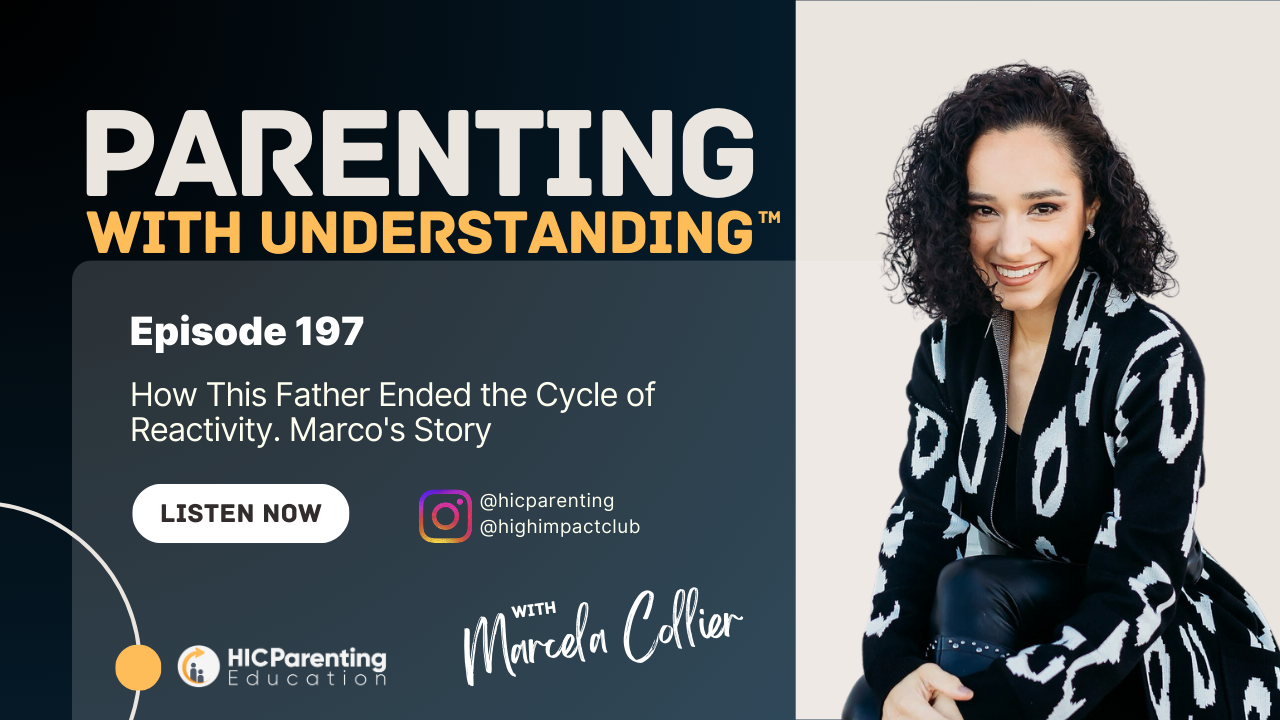
A note from me to you
If you’re here, it’s probably not because parenting feels easy right now.
It’s probably because something feels off.
You love your child so deeply.
And yet… days feel hard.
There’s yelling.
Power struggles.
Meltdowns that come out of nowhere.
And at night, when the house is finally quiet, you wonder:
Why isn’t what I’m doing working?
What am I missing?
Is something wrong with my child… or with me?
I want you to take a breath right now.
Because the answer might surprise you.
👉 Your child’s behavior isn’t the problem.
And in this article, I’m going to show you what actually is.
This is the place where you’ll find the answers you’ve been searching for.
Not quick fixes.
Not parenting shame.
But clarity.
Relief.
And a path forward.
I’m going to talk to you like I would if we were sitting together, coffee in hand, after a long day with our kids.
Let’s begin.
1. Why behavior feels like the problem (but isn’t)
Most parents come to me saying the same thing.
“My child doesn’t listen.”
“My child explodes over small things.”
“My child is aggressive, anxious, withdrawn, or defiant.”
And I get it.
When behavior is loud, intense, or scary, it takes up all the space in the room.
It feels urgent.
It feels like this is what needs fixing.
I’ve been there too.
I remember watching my own child melt down and thinking,
If I could just stop this behavior, everything would be okay.
But here’s the truth I learned the hard way:
👉 Behavior is not the root. It’s the signal.
Behavior is your child’s way of communicating something they don’t yet have words for.
Especially sensitive kids.
Especially neurodivergent kids.
They don’t wake up wanting to make life hard.
They are telling us something.
2. What your child is really saying with their behavior
When a child yells, hits, shuts down, or refuses…
They are not saying:
“I want to be difficult.”
They are saying:
“I don’t feel safe.”
“I’m overwhelmed.”
“I don’t know how to handle what’s happening inside me.”
Behavior is communication.
Always.
And when we try to stop the behavior without understanding the message, kids get louder.
Not because they’re bad.
But because they’re not being heard.
3. Why sensitive and neurodivergent kids struggle more
If you’re parenting a sensitive or neurodivergent child, this part matters deeply.
These kids feel everything more.
Sounds are louder.
Transitions are harder.
Emotions hit fast and big.
Their nervous systems work overtime.
So when stress builds up, it spills out as behavior.
Not because they lack discipline.
But because their system is overloaded.
This is why traditional discipline often makes things worse.
It focuses on control.
Your child needs safety.
4. The mistake loving parents make (I made it too)
Here’s the mistake almost every loving parent makes at some point.
We focus on fixing the child.
We try new scripts.
New tools.
New charts.
New consequences.
And when nothing works, we feel like failures.
I’ve had parents tell me:
“I’ve read all the books.”
“I follow gentle parenting accounts.”
“I know what I’m supposed to say.”
But knowledge without nervous system safety doesn’t land.
Kids don’t respond to perfect words.
They respond to your state.
5. Why your nervous system matters more than your words
This is the shift that changes everything.
Your child is not responding to what you say.
They are responding to how you feel inside.
Kids are wired to sense safety.
If you’re tight, rushed, anxious, or angry—even silently—your child feels it.
And when your nervous system is dysregulated, theirs follows.
This is not your fault.
It’s biology.
6. The real root of “bad behavior”
Let me say this clearly:
👉 The real problem is not your child’s behavior.
The real problem is a dysregulated system trying to connect.
Once you see this, everything changes.
Because now you know where to start.
Not with punishment.
Not with lectures.
But with regulation.
7. A story from a parent I worked with
I worked with a dad who questioned every day if he was a good father.
His son was five.
Smart.
Sensitive.
Explosive.
The dad tried staying calm.
Tried talking it through.
Tried being gentle.
But inside, he felt lost.
Every meltdown felt like proof he was failing.
What changed everything was not a new parenting script.
It was learning how to notice his own state first.
When he paused…
Grounded himself…
And approached his child from calm…
The behavior softened.
Not overnight.
But consistently.
Because safety was finally leading the way.
8. What secure parenting actually looks like
Secure parenting is not perfect parenting.
It’s not never yelling.
It’s not always knowing what to do.
Secure parenting means:
You can come back to calm.
You can repair.
You don’t spiral into shame.
Your child doesn’t need you to be perfect.
They need you to be safe enough.
9. Why punishment breaks connection
Punishment focuses on stopping behavior.
But it doesn’t teach skills.
It teaches fear.
Or compliance.
Or shutdown.
And sensitive kids either fight back or disappear inside.
Neither builds trust.
Connection does.
10. The order that actually works
Here’s the order that changes everything:
1️⃣ Regulate yourself
2️⃣ Connect with your child
3️⃣ Teach or guide behavior
Most parents try to start at step three.
That’s why it feels so hard.
11. A simple tool you can try today
Next time your child melts down:
Pause.
Ask yourself:
👉 “Am I calm enough to lead?”
If not, take one breath.
Drop your shoulders.
Soften your face.
You don’t need to say anything right away.
Your calm is the intervention.
12. Why this breaks generational cycles
Many of us were raised with fear, control, or emotional distance.
So when we get overwhelmed, those old patterns show up.
We sound like our parents.
Even when we promised we wouldn’t.
Learning regulation isn’t just for your child.
It heals you too.
13. You are not failing, you are learning
If you’re still reading, you are a good parent.
Good parents seek answers.
Good parents care deeply.
You’re not broken.
You were never taught this.
14. What real change looks like over time
When you lead with safety:
Meltdowns shorten.
Connection grows.
Trust rebuilds.
Your child opens up more.
And parenting feels lighter.
Not perfect.
But more peaceful.
15. This is why I created the Parenting With Understanding system
I created this system because parents needed a roadmap.
Not more guilt.
Not more pressure.
But skills that work with real kids.
Especially sensitive and neurodivergent ones.
16. If you’re ready for support, start here
If this article spoke to you…
If you’re tired of reacting…
If you want to raise secure kids without losing yourself…
I want to invite you to our free class.
This class will show you how to:
✔️ Stop angry reactions
✔️ Respond calmly during chaos
✔️ Understand what your child actually needs
17. How to access the free class
To join, all you need to do is this:
👉 Go to Instagram and DM us the word “peace 25.”
That’s it.
We’ll send you the class right away.
18. One last thing I want you to remember
Your child is not the problem.
You are not the problem.
There is nothing wrong with your family.
You just need the right tools.
And you don’t have to do this alone.
DM “peace 25” on Instagram to get started.
I’ll be there with you.


