
Epi #195. Tools For Instant Calm Every Parent Needs to Know.
Dec 16, 2025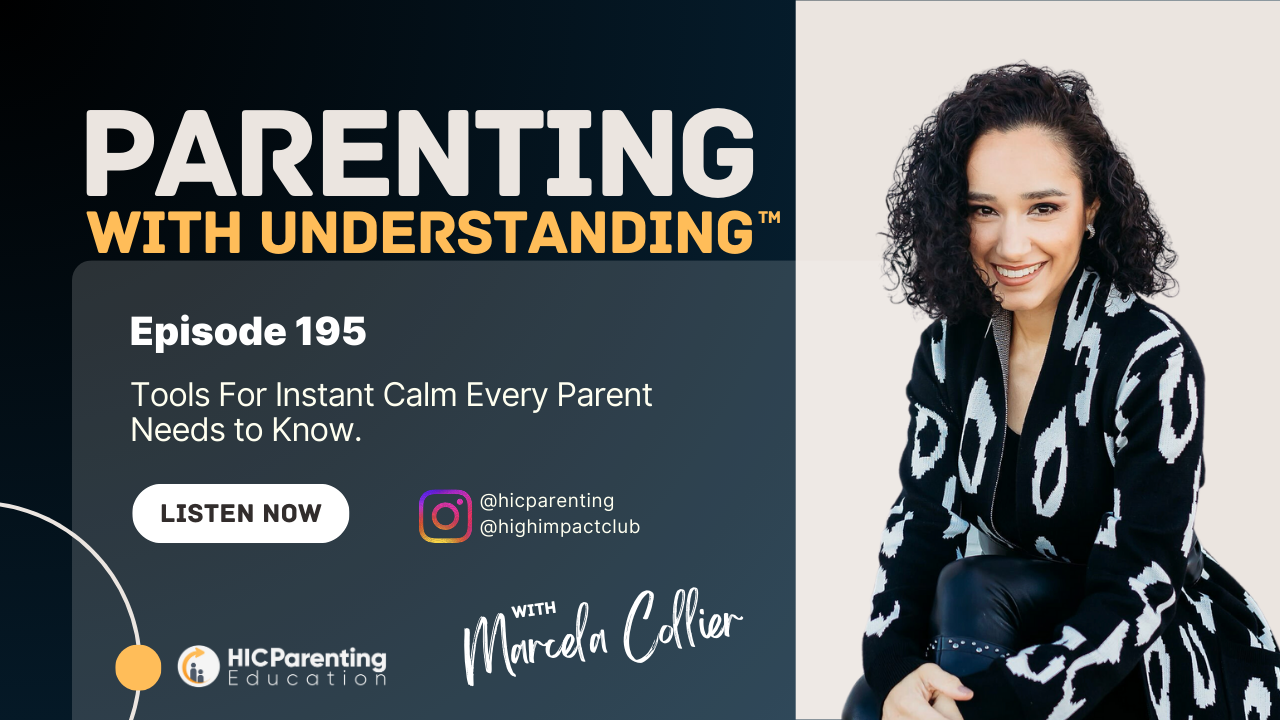
Have you ever promised yourself, “Today I will stay calm”…
and then five minutes later you’re yelling, snapping, or shutting down?
I know that feeling so well.
And if you’re here, I know you do too.
You love your child.
You want a peaceful home.
You want to break the cycle.
But somehow, the same moments keep pulling you back in.
This article is where you’ll finally find the why behind that pattern
and the how to change it.
Not with more discipline charts.
Not with more “try harder” advice.
But by fixing what’s really underneath.
I’m going to walk you through this step by step, like I would if you were sitting across from me on a couch.
Slow.
Simple.
Human.
1. The Desire Every Parent Has (And the Guilt That Follows)
Every parent I work with tells me the same thing.
“I just want to stay calm.”
“I don’t want to yell.”
“I want my child to feel safe with me.”
And then comes the guilt.
Because you know better.
You’ve read the books.
You follow gentle parenting pages.
Yet in the hardest moments…
your body takes over.
You snap.
You raise your voice.
Or you shut down completely.
And later, when the house is quiet, you think:
“What is wrong with me?”
Let me say this clearly.
Nothing is wrong with you.
Your child’s behavior is not the problem.
And you are not the problem either.
2. Why Behavior Is Never the Real Issue
When your child melts down…
refuses to listen…
hits, screams, or runs away…
It looks like a behavior problem.
But behavior is just the signal.
It’s like a smoke alarm.
The alarm is loud, but it’s not the fire.
So when we focus only on stopping the behavior,
we miss what’s actually burning underneath.
And that’s why punishment doesn’t work long term.
It might stop the behavior for a moment.
But it doesn’t fix the root.
3. The Real Root of Reactivity (This May Surprise You)
Here is the truth most parents never hear.
Reactivity does not come from your child.
It comes from your inner world.
Your body remembers things your mind forgot.
If you were rushed as a child…
yelled at during transitions…
shamed for emotions…
Your nervous system learned:
“Big emotions are not safe.”
So when your child has big emotions today,
your body reacts like it’s under attack.
Not because you’re bad.
Not because your child is “too much.”
But because your nervous system is trying to protect you.
4. Why Deep Breaths Don’t Work When You’re Triggered
You’ve probably been told:
“Just breathe.”
“Count to ten.”
And maybe that works… sometimes.
But when your body is in fight-or-flight,
logic shuts off.
When your nervous system thinks there is danger,
it cannot calm down with words alone.
This is why you can know what to do
and still not be able to do it.
Your child feels this too.
Children don’t connect to our words first.
They connect to our nervous system.
So if you sound calm but feel unsafe inside,
they sense it.
5. The Three Nervous System States Every Parent Needs to Know
Let’s make this simple.
There are three main states your nervous system moves through.
Red: Fight or Flight
This is when you yell, threaten, demand, or rush.
Your body is saying:
“I am not safe.”
Blue: Shutdown
This is when you feel numb, exhausted, or detached.
You’re not yelling…
but you’re gone.
This is actually a deeper level of stress.
Green: Calm and Connected
This is where learning, listening, and cooperation happen.
Playfulness lives here.
Problem-solving lives here.
The goal is not to never be red or blue.
The goal is knowing how to come back to green.
6. Why “Good Kids” Are Sometimes the Most Dysregulated
This part is hard to hear.
Kids who look “too mature”
or “too easy”
are often in shutdown.
They learned early that emotions were not welcome.
So they comply.
They freeze.
They disappear.
As adults, many of those kids become parents who shut down instead of yell.
Neither is safety.
True safety lives in green.
7. Awareness Is the First Skill of a Secure Parent
Before anything changes, one thing must happen.
You need awareness.
Not judgment.
Not fixing.
Just noticing.
What happens in your body when your child struggles?
Tight chest?
Clenched jaw?
Heat in your arms?
Most parents tell me,
“I don’t feel anything.”
But that’s not true.
It means your body learned to disconnect.
And when you don’t feel it early,
it explodes later.
8. Naming the Feeling Changes Everything
Instead of saying:
“I feel bad.”
Try naming it.
Angry.
Scared.
Overwhelmed.
Grieving.
Each feeling tells a different story.
Fear often says:
“If I don’t fix this, my child’s future is ruined.”
Grief often says:
“This is not how I imagined parenting would feel.”
When you name it, your nervous system organizes.
And organized feelings don’t control you.
9. Why Sensory Tools Matter (Especially for Neurodivergent Parents)
I am autistic.
I have ADHD.
Breathing alone does not regulate me.
Movement does.
Holding a plank.
Running in place.
Strong pressure.
Your child may need this too.
A sensory-seeking child cannot calm down by sitting still.
Their body needs safe release.
Redirecting energy is not rewarding behavior.
It’s meeting a need.
10. The ANCHOR Method for Instant Calm
This is the tool I teach parents every day.
A — Awareness
Notice what’s happening in your body.
N — Naming
Name the feeling clearly.
C — Connect to a Sensory Tool
Movement, pressure, sound, or grounding.
H — Honor the Process
You’re learning.
This takes time.
O — Open to Connection
Return when you’re regulated.
R — Recommit to Presence
Repair.
Reconnect.
Try again.
Secure parents are not perfect.
They repair.
11. You Don’t Need More Time — You Need Permission
Most parents say:
“I don’t have time to regulate.”
But even 10 seconds matter.
One minute matters.
Your nervous system does not need perfection.
It needs consistency.
I remember placing my twins in a playpen
and doing a 15-minute workout.
That saved my sanity.
Small care creates big capacity.
12. Your Nervous System Is Not Broken
Let me say this again.
Your nervous system is wise.
It adapted to survive your childhood.
Now it’s asking for safety.
When you stop fighting yourself,
everything changes.
13. This Is How Cycles Break
Cycles don’t break with willpower.
They break with understanding.
When you understand your needs
and your child’s needs…
Anger loses its grip.
Power struggles soften.
Connection grows.
14. A Gentle Reminder for You
If this article feels heavy,
that means it touched truth.
And if it feels hopeful,
that means your body is ready for change.
You are not behind.
You are right on time.
Your Next Step (This Is Important)
If you want to go deeper
and actually apply this…
I invite you to join my free class
where I teach the Parenting With Understanding™ System of Needs.
This is where parents learn to:
- Stop angry reactions
- Respond with calm
- Raise secure children
👉 Go to Instagram and DM us the word “peace 25.”
We’ll send you the class.
You don’t need to do this alone.
You were never meant to.
With so much love,
Marcela Collier
HIC Parenting 💛


